How Much Does 10 Yard Dumpster Hold near Linden?
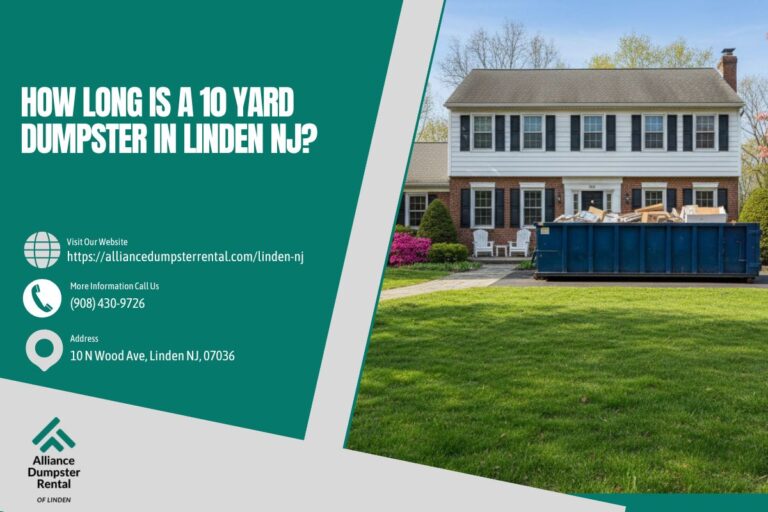
A 10-yard dumpster near Linden holds 270 cubic feet of material—that’s 12 feet long, 8 feet wide, and 3.5 feet high. You’re working with a peak weight capacity of 2-3 tons (4,000-6,000 pounds), which equals roughly 3-4 pickup truck loads. Dense materials like concrete or soil will reach their weight limit before filling the volume. Calculate your debris type carefully, as overloading triggers supplementary fees. Strategic loading techniques and proper material distribution can help you optimize this capacity while staying within compliance thresholds.

Capacity of a 10 Yard Dumpster
A 10 yard dumpster holds approximately 10 cubic yards of material, which translates to roughly 270 cubic feet of total capacity.
You’ll typically find these containers measuring 12 feet long, 8 feet wide, and 3.5 feet high. This configuration allows you to load approximately 3-4 pickup truck loads of debris without affecting your project timeline.
The maximum weight capacity is 2-3 tons (4,000-6,000 pounds), depending on material density and local regulations.
You’re free to fill the container to the rim, but overloading beyond the weight limit results in additional fees. Dense materials such as concrete, soil, and brick reach weight thresholds more quickly than lighter debris.
Calculate your load’s volume and estimated weight before ordering to confirm you’ve selected appropriate dumpster specifications for your Linden project.
See also: Linden NJ 10 yard dumpster rental
Total cubic yard volume explained
Understanding cubic yard measurements requires grasping how waste management professionals calculate container volume. The capacity of a 10-yard dumpster is the total volume available for your debris, measured in cubic yards.
You’ll want to know exactly what you’re getting before committing to a rental.
Here’s how the volume breaks down:
- Physical dimensions: 12 feet long × 8 feet wide × 3.5 feet high
- Volume calculation: Length × width × height ÷ 27 (cubic feet per cubic yard)
- Total capacity: 10 cubic yards of actual usable space
This measurement gives you the freedom to plan your project accurately.
Alliance Dumpster Rental of Linden guarantees you’re getting legitimate cubic yardage, not inflated estimates. You’re paying for real volume, allowing efficient disposal without unnecessary restrictions or surprise fees.
Weight limits and load restrictions
Weight capacity for 10-yard dumpsters typically ranges from 2-4 tons (4,000-8,000 pounds), depending on your rental agreement and local landfill regulations.
You’ll exceed these limits faster with dense materials like concrete, soil, or roofing shingles than with lighter debris such as wood or drywall. Overloading triggers extra fees and potential safety violations during transport.
Check your specific weight allowance before loading—you’re responsible for staying within contracted limits.
Dense materials compress volume but contribute substantial weight quickly. Calculate approximately 500-700 pounds per cubic yard for construction debris, though actual weights vary greatly by material type.
If you’re approaching weight limits, request a heavier-capacity container or schedule extra hauls.
You maintain control over costs by understanding these restrictions upfront and planning your disposal strategy accordingly.
What Fits in a 10 Yard Dumpster
Your 10-yard dumpster accommodates approximately 50-60 standard 13-gallon trash bags or roughly three pickup truck loads of material.
This capacity translates to 10 cubic yards of total volume, measured as 12 feet long by 8 feet wide by 3.5 feet high.
Common projects within capacity limits:
- Minor bathroom renovations – Vanity removal, old fixtures, tile debris, and standard construction waste from single-bathroom updates
- Garage cleanouts – Accumulated household items, boxes, old equipment, and general clutter from single-car garage spaces
- Minor landscaping projects – Soil removal, small shrub extraction, and yard waste from areas up to 500 square feet
You’ll maintain compliance with weight restrictions while maximizing your available space.
Calculate material density before loading to prevent overage charges in Linden.
Common household and renovation debris
Standard demolition materials have predictable weight-to-volume ratios that directly affect your 10-yard dumpster capacity in Linden. You’ll enhance your rental by understanding these common debris categories and their spatial requirements.
| Material Type | Volume per Unit | Typical Load |
|---|---|---|
| Drywall | 500 sq ft | 2-3 tons |
| Carpeting | 1,000 sq ft | 1.5 tons |
| Wood framing | 800 linear ft | 2 tons |
| Roofing shingles | 150 sq ft | 3 tons |
| Concrete/brick | 50 sq ft | 4 tons |
Your 10-yarder accommodates roughly 40 contractor bags of household debris or three standard room cleanouts. Dense materials like concrete reach weight limits before volume capacity, whereas bulky items such as furniture increase space without approaching tonnage limits. Calculate your project’s material composition to optimize container selection.
Approximate pickup truck load comparison
A 10-yard dumpster holds approximately three to four full-size pickup truck loads, though this comparison requires qualification based on truck bed dimensions and loading methods.
Standard pickup beds measure 6.5 to 8 feet, with loading capacity constrained by sidewall height and payload limits.
You’ll find this comparison helpful in estimating project scope:
- Level loads: 4 truck loads match the dumpster capacity when materials sit flush with the bed rails
- Heaped loads: 3 truck loads, approximate capacity when you pile materials above the sidewalls
- Dense materials: Weight restrictions force fewer trips than volume suggests, particularly with concrete or soil
Understanding these ratios helps you determine whether multiple truck hauls or a single dumpster rental better serves your timeline and budget requirements in Linden.
Best Projects for a 10 Yard Dumpster
Small-scale renovations and cleanouts represent the ideal applications for 10-yard dumpsters, with project parameters typically involving 200-400 square feet of workspace or material removal.
You’ll find this capacity perfect for bathroom remodels, kitchen cabinet replacements, or garage decluttering projects. Flooring removal from two standard rooms and roofing debris from small shed structures not exceeding 1,500 square feet are within the volumetric limits.
Your single-room demolition projects won’t require municipal variance permits when utilizing this size classification.
Landscaping debris from moderate yard clearances, including brush removal and minor tree trimming, stays within weight restrictions.
Basement cleanouts that contain household items, stored materials, and non-hazardous waste are handled efficiently.
Estate cleanouts for apartments or small residential spaces maintain compliance with local disposal regulations while maximizing your operational efficiency.
Small cleanouts and remodeling jobs
Residential remodeling projects that require demolishing non-load-bearing walls, replacing fixtures, or removing surface materials generate approximately 2-4 cubic yards of debris per standard room.
You’ll find a 10-yard container accommodates complete bathroom renovations (tub, vanity, flooring) or kitchen updates involving cabinet removal and countertop replacement.
Small estate cleanouts, clearing furniture, household items, and accumulated possessions from 1-2 rooms, fit within the 10-yard capacity threshold.
Typical debris volumes for common projects:
- Bathroom remodel (fixtures, tile, drywall): 3-4 cubic yards
- Kitchen cabinet removal with countertops: 2-3 cubic yards
- Single-room cleanout (furniture, carpeting): 2-3 cubic yards
Calculate your total volume before ordering to avoid container overages and supplementary disposal fees that restrict your project timeline flexibility.
Landscaping and yard waste uses
Ten cubic yards provides sufficient capacity for seasonal yard maintenance projects that generate moderate volumes of organic debris.
You’ll handle approximately 30-40 standard lawn bags of leaves, grass clippings, and light brush without exceeding weight restrictions. The container accommodates pruned branches up to four feet in length, though you must cut longer limbs to meet disposal facility requirements.
Calculate density carefully—wet leaves and soil-laden roots add significant weight. Most providers impose 2-3-ton limits on organic materials due to moisture content.
You’re free to mix vegetation types, but separate soil, sod, and heavy root systems when approaching capacity thresholds.
This size suits quarter-acre properties requiring complete seasonal clearing. You won’t need to follow municipal pickup schedules or make multiple trips to composting facilities.
Load strategically by placing dense materials first, then fill gaps with lighter debris to optimize space utilization.
Tips for Maximizing Dumpster Space
Strategic loading techniques increase usable capacity by 20-30% compared to random debris placement.
You’ll maximize your 10-yard dumpster’s capacity through systematic organization that adheres to physics and rental agreements.
Essential Space Optimization Methods:
- Break down bulky items – disassemble furniture, flatten cardboard boxes, and cut dimensional lumber to eliminate air gaps that waste cubic footage.
- Load heavy materials first – Place dense debris at the bottom to create a stable foundation that supports lighter materials and prevents shifting during transport.
- Fill voids strategically – Pack smaller debris into gaps between larger items, utilizing every available cubic inch without exceeding the container’s rim.
These techniques keep you within weight limits while optimizing volume utilization, giving you complete control over your project’s waste-management efficiency.
Loading techniques for efficient use
Proper loading sequence transforms a 10-yard container’s 10′ x 8′ x 3.5′ dimensions into a mathematically optimized waste repository.
You’ll optimize volumetric efficiency by initially placing flat materials along the bottom to create a stable foundation. Break down boxes and disassemble furniture—you’re eliminating air pockets that waste cubic footage. Load heavier items next, distributing weight evenly across the container’s floor to maintain structural integrity and comply with transportation regulations.
Fill vertical spaces strategically by nesting smaller debris between larger pieces. You’re fundamentally creating a three-dimensional puzzle that enhances your contracted volume.
Avoid the center-mounding technique that leaves perimeter voids unused. Instead, build from corners outward, maintaining level layers until you’ve reached the fill line. This systematic approach typically yields 15-20% more capacity than random disposal methods.
Avoiding overfilling and extra fees
Understanding the fill line on your 10-yard container’s maximum capacity protects you from extra charges that typically range from $50 to $150 per overage incident.
You’ll maintain compliance with transport regulations by keeping materials level with the container’s rim—exceeding this threshold creates safety hazards and legal violations during hauling.
Critical overfill prevention measures:
- Monitor vertical clearance: Keep debris 12 inches below the top edge for proper tarp coverage during transport.
- Calculate weight distribution: Distribute heavy materials evenly—exceeding the 2-3 ton weight limit triggers extra tonnage fees.
- Schedule strategic pickups: Request timely removal before approaching capacity rather than compacting materials beyond acceptable levels.
You’re in control when you respect volume boundaries.
Alliance Dumpster Rental of Linden provides clear fill-line indicators to eliminate guesswork and unnecessary costs.
Frequently Asked Questions
How Long Can I Keep a 10 Yard Dumpster Rental?
You’ll typically keep your 10-yard dumpster for 7-14 days, depending on the rental period. Need more time? You’re free to extend your rental—coordinate with us beforehand. We’ll calculate extra days based on your project’s volume requirements and timeline.
What Items Are Prohibited in a 10 Yard Dumpster in Linden?
You can’t dispose of hazardous materials, electronics, batteries, tires, paint, oil, asbestos, or medical waste in your 10 yard dumpster. These regulated items require specialized handling facilities to protect Linden’s environment and your disposal freedom.
Do I Need a Permit for a Dumpster in Linden NJ?
You’ll need a permit if you’re placing your dumpster on public property like streets or sidewalks in Linden. Contact the City Clerk’s office to obtain proper authorization. Private property placement typically doesn’t require permits.
How Much Does a 10 Yard Dumpster Rental Cost Near Linden?
You’ll typically pay $250-$400 for a 10 yard dumpster rental near Linden, depending on your project duration and debris type. We’ll help you optimize your 10-cubic-yard capacity without unnecessary restrictions or hidden fees.
Can the Dumpster Be Placed on the Street in Linden?
You’ll need a permit from Linden’s Public Works Department before placing a dumpster on any street. Contact them directly to verify current regulations, fees, and placement restrictions. Your driveway’s always the permit-free alternative.